
U.S. Economy not “behaving”
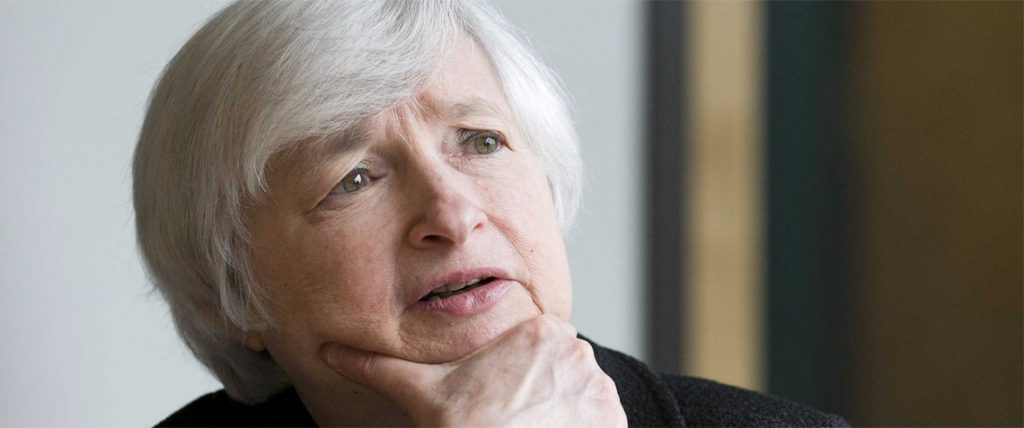 Following yesterday’s FOMC meeting, Fed Chair Janet Yellen acknowledged that inflation is causing the committee a concern. Expectation had been for price rises to accelerate despite rate hikes but that has not been the case.
Various “one-off” reasons had been cited by FOMC members for the lack of inflation in the economy but until the Fed withdraws its bond purchase scheme and shrinks its balance sheet the true picture will remain vague.
It was always considered that “printing money” would bring inflation but even as the Fed considers withdrawing support “fairly soon” a further rate hike this year is only considered 50/50 by the market.
The dollar index has slumped by 10% since January reaching a low of 93.16. The Euro, which makes up 53% of basket, has rallied to 1.1770 in an almost straight line since ECB President Mario Draghi was interpreted as turning a little hawkish in his view of Eurozone monetary policy.
The interest rate differential, real or imagined, had provided support for the dollar but as other G7 nations consider withdrawal of stimulus measures, that support is waning.
EU political concerns starting to return
 Just when we all thought that the EU had found the holy grail of political stability and steady growth, Brussels brings a heavy hand to bear on an individual state.
In Poland, the Government has been grappling with new legislation that is wholly domestic, yet Brussels feels it needs to interfere to protect the integrity of its control over member states. Hungary, which is growing in stature as a protector of individual member rights, has supported the right of Poland to manage its own internal affairs.
Having seen political stability grow in Western Europe following the elections in France and the Netherlands and the likely outcome in Germany, the EU is in danger of slipping backwards.
In Germany, there are concerns being voiced by the major exporters over what Brexit will mean. Their spokesman was quoted recently as saying that uncertainty is badly affecting the ability to plan and having to find new markets will not be easy.
The Euro, which was flirting with parity with the dollar at the start of the year has now risen by 14%. The dampening effect of this rise on inflation will allow Mario Draghi to continue to hold interest rates at historically low levels for another eighteen months and possibly two years. However, the stronger currency will also influence trade where exports will rise in price for overseas buyers and imports into the region will become cheaper.
U.K. Growth data removes lingering rate hike possibility
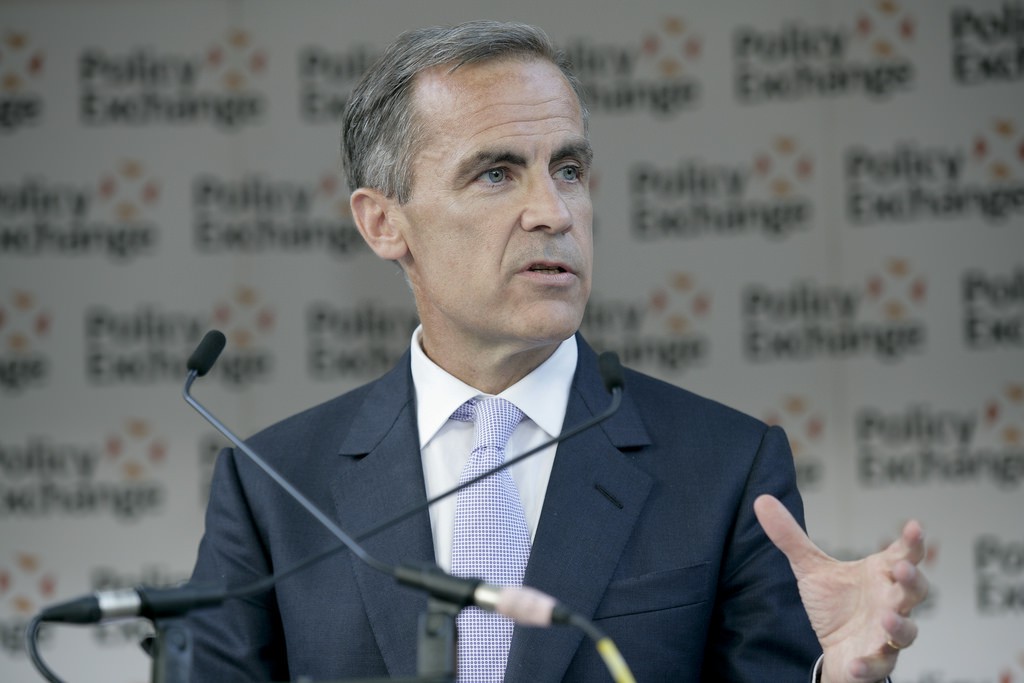 Next week’s MPC meeting in the U.K. had been “billed” as being the most important virtually since the committee was formed in 1997. Divisions had started to appear a few months ago as first, (now departed) independent member Kristin Forbes then two colleagues, Ian McCafferty and Michael Saunders voted in favour of an interest rate hike to control inflation.
Now, following the release of data for June which showed a fall from 2.9% to 2.6% in headline inflation, growth data which shows a slowing economy and (the inevitable) Brexit headwinds, the meeting should be plain sailing for Governor Mark Carney.
Carney has been consistent in his insistence that there is “too much going on” within the U.K. economy for a rate hike to be considered. He was somewhat chastened by the reaction to the rate cut which followed the Brexit referendum result and has remained conservative in his view of the economy.
It has emerged that Carney believes that a rate hike can be delayed until after Brexit is complete which, ironically when he has announced he will be stepping down.